
ClarityTrack: Governing an AI Agent That Can Act on Financial Data
A live AI agent that reads people's real financial accounts, drafts their month and changes their records on request, with the guardrails enforced in code: read-only bank access, server-side math, and a confirmation before anything hard to undo.
Live demo uses sample data. No signup or card needed.
The Challenge
Every organization looking at AI agents is stuck on the same question: how do you let an AI act on sensitive data without it doing something nobody approved? Most answers are still slideware. ClarityTrack had to answer it in production, with real people's bank accounts.
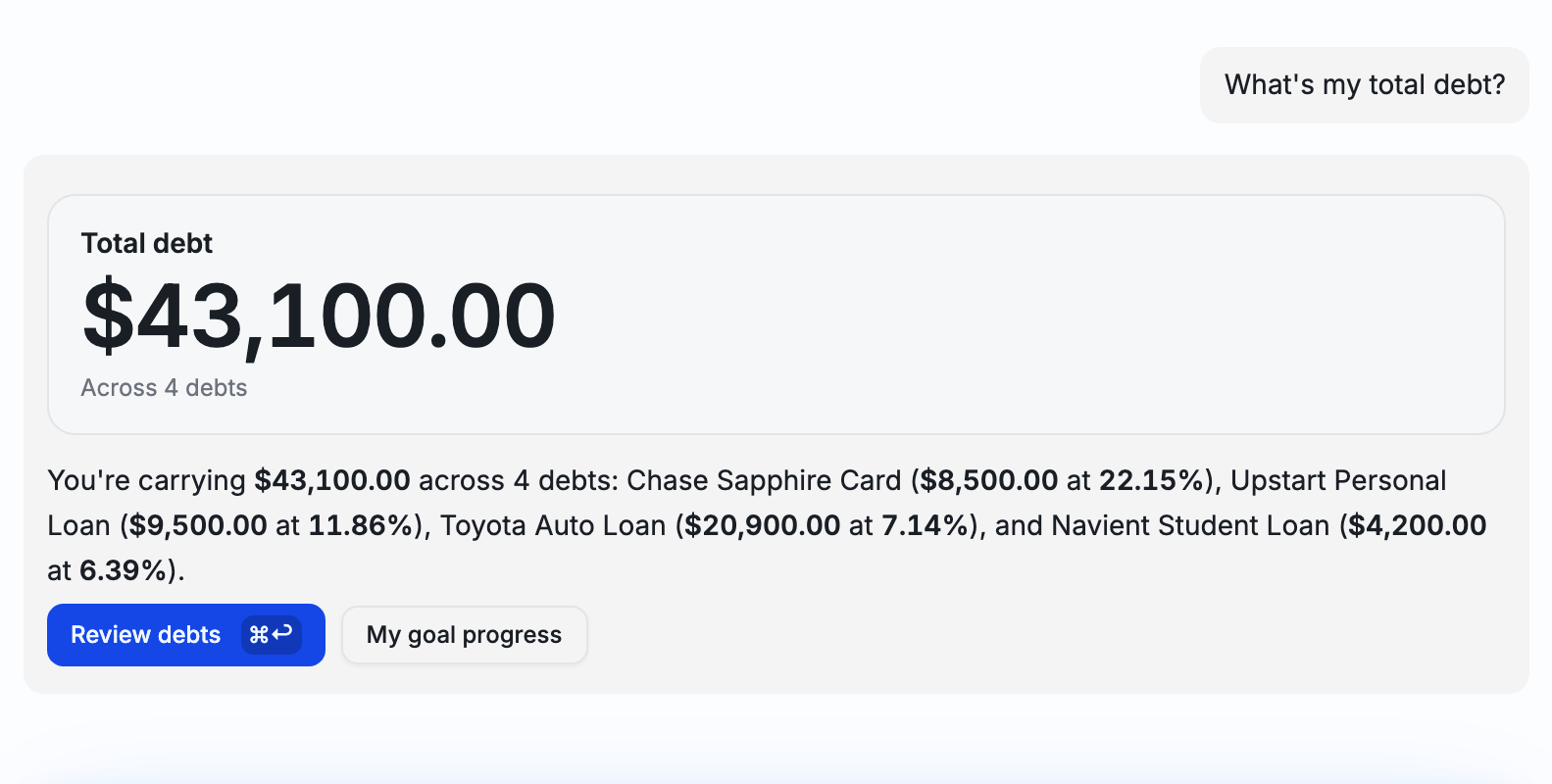
The promise is simple. Ask Clarity, the AI assistant, whether you're ahead or behind on a goal, and it answers from your own connected accounts, drafts the month around it, and makes the changes you ask for. Getting there meant solving the problems every regulated enterprise will meet with agents: a model that can't be trusted with arithmetic, actions that can't be taken back, outside AI tools that want the same data, and one person's money that has to stay separate from a business's.
Specific challenges:
- A language model can't be the source of truth for a single number, yet customers expect instant, conversational answers
- The agent had to change records on request without ever taking an action the customer didn't intend
- Outside assistants like ChatGPT, Claude and Grok needed the same data without widening what any of them could see or do
- Trust had to be provable to a skeptical customer, not asserted in a privacy policy
The Solution
ClarityTrack runs on one principle: the governance lives in the architecture, not the prompt. The model explains and proposes. Deterministic server code does the math. The platform decides what is allowed to execute, and the customer confirms anything that matters.
Core Features
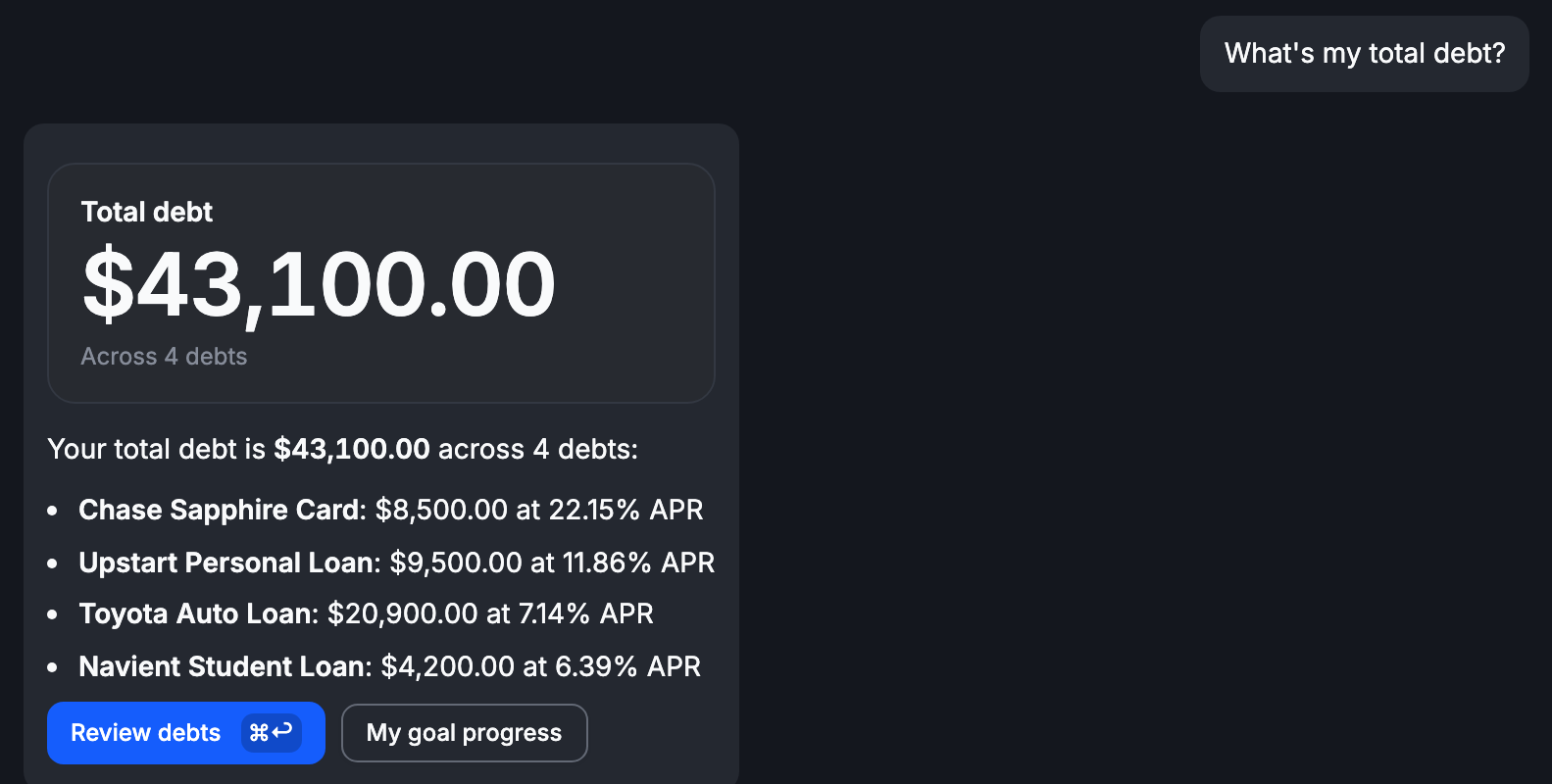
- The model never owns a number: Every balance, total and projection is computed by server functions, so the same question returns the same figure in the app, in ChatGPT, in Claude or in Grok.
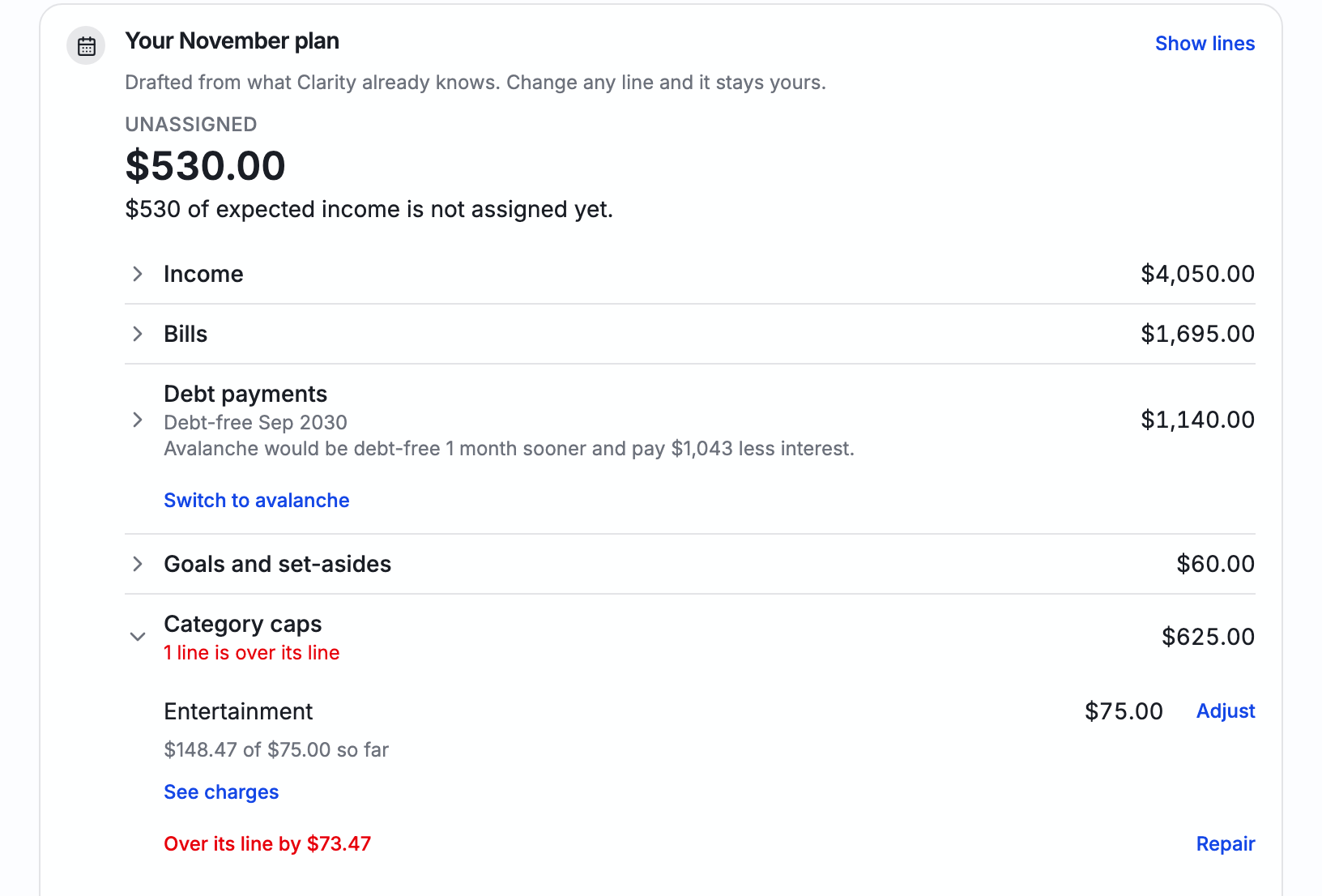
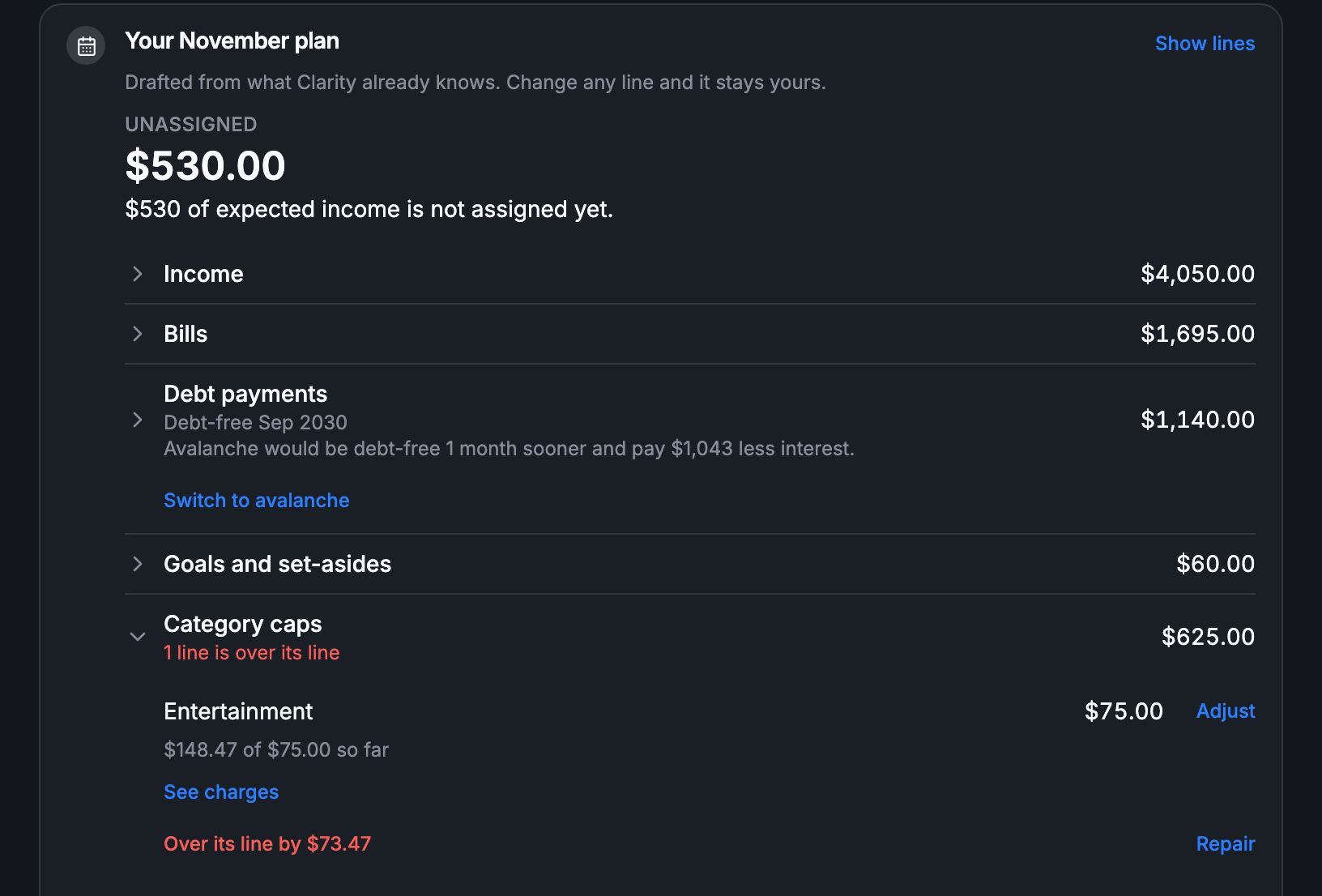
- Drafts the month, then waits for a yes: Clarity drafts a month plan from income, bills, debt payments and goals, checks the bills it found with the customer, and saves nothing until the customer confirms.
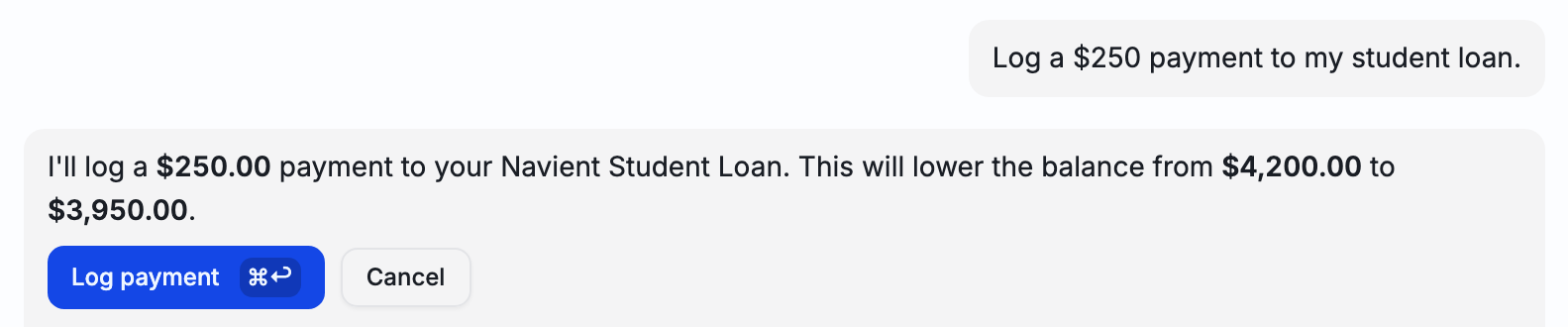
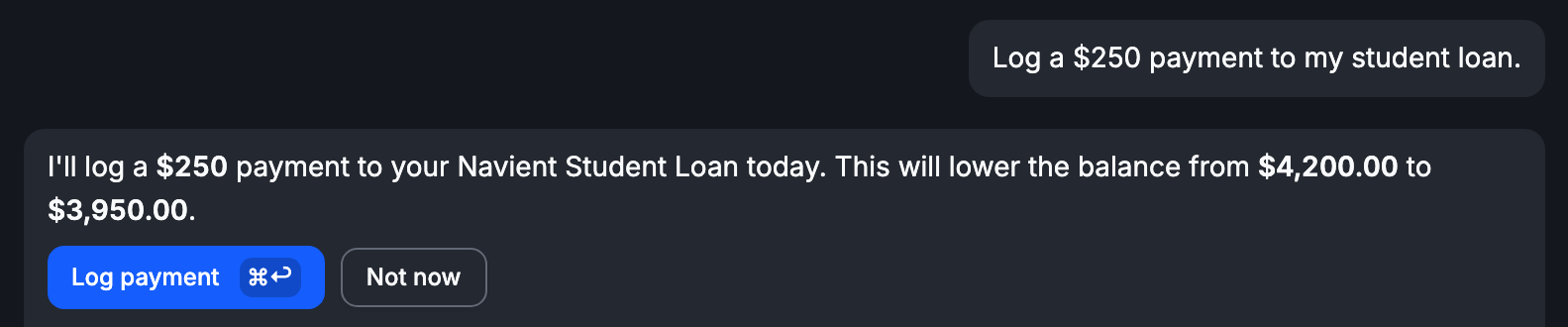
- Confirm before anything hard to undo: More than 50 agent actions cover budgets, debts, payments, transactions, goals and the month plan. Small reversible edits apply right away and can be undone by asking; anything hard to undo shows a preview and runs only after the customer confirms, with a signed token the server verifies.
- Read-only at the source: Bank, card, loan and investment accounts connect through Plaid read-only: ClarityTrack can see the account data and can't move money. There is no code path that does.
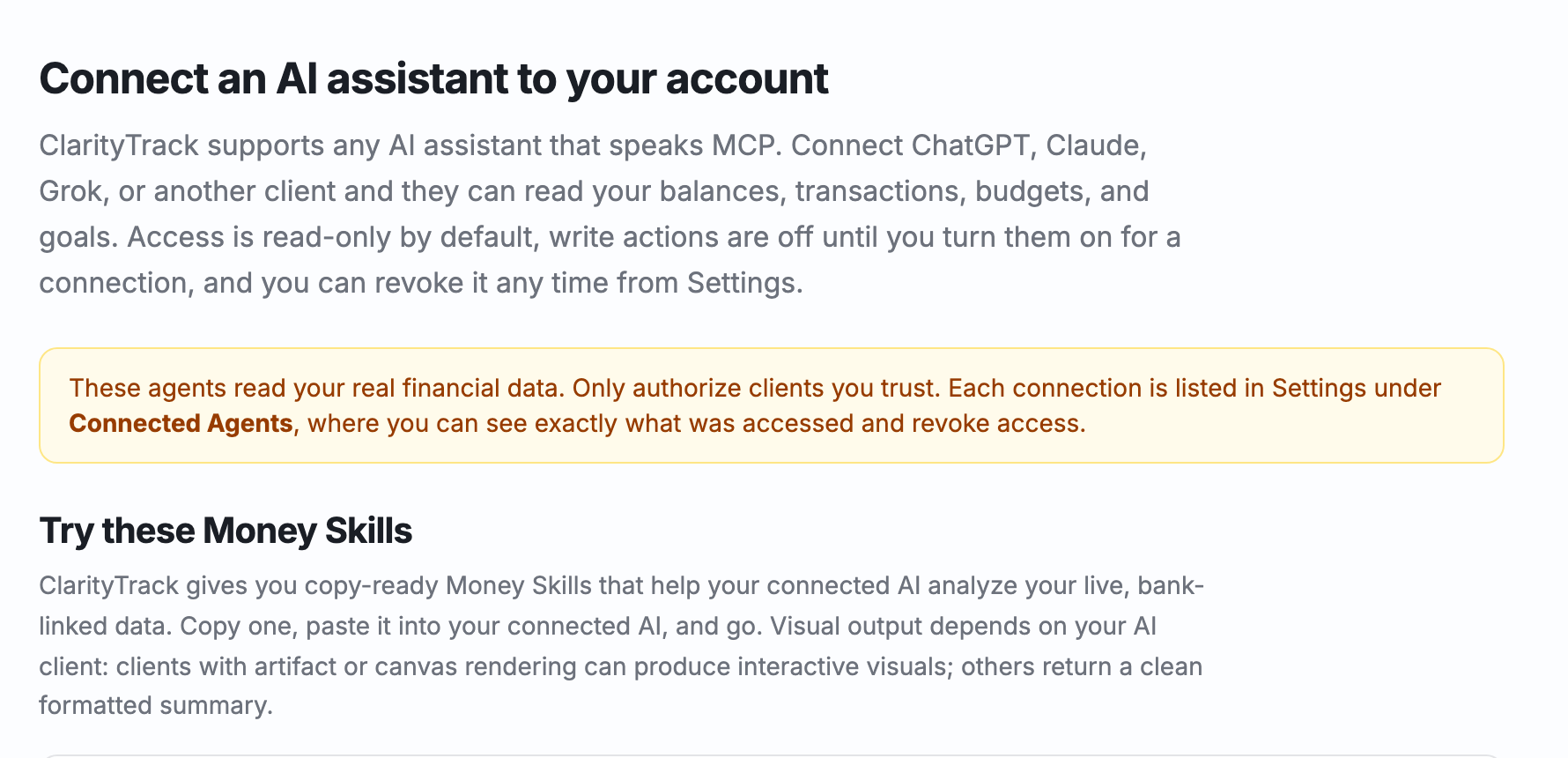
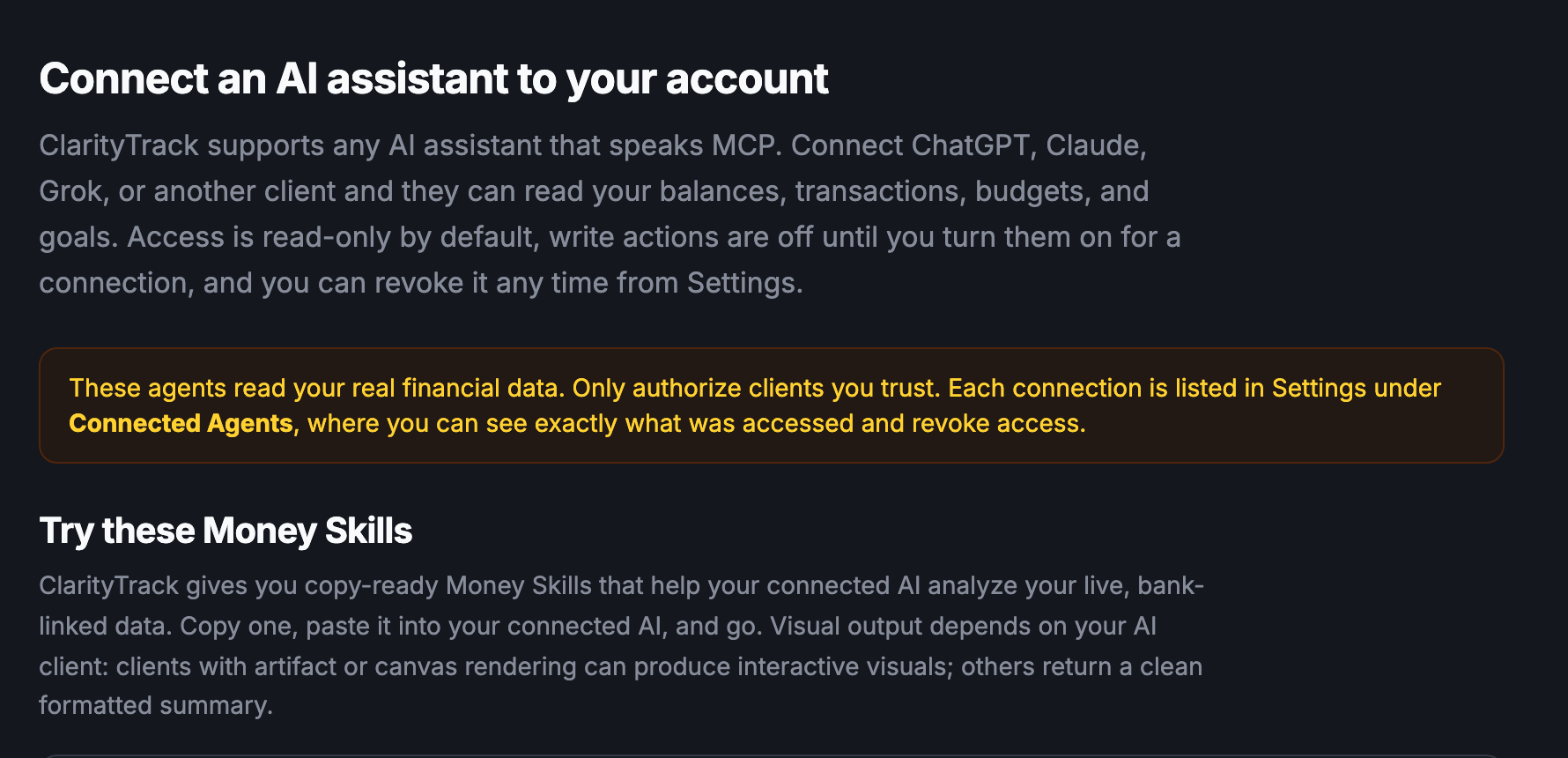
- Least-privilege AI connections: A published ChatGPT app and working Claude and Grok connectors act only as the signed-in customer and see only that customer's data. They are read-only by default, and write access is turned on per connection by the customer.
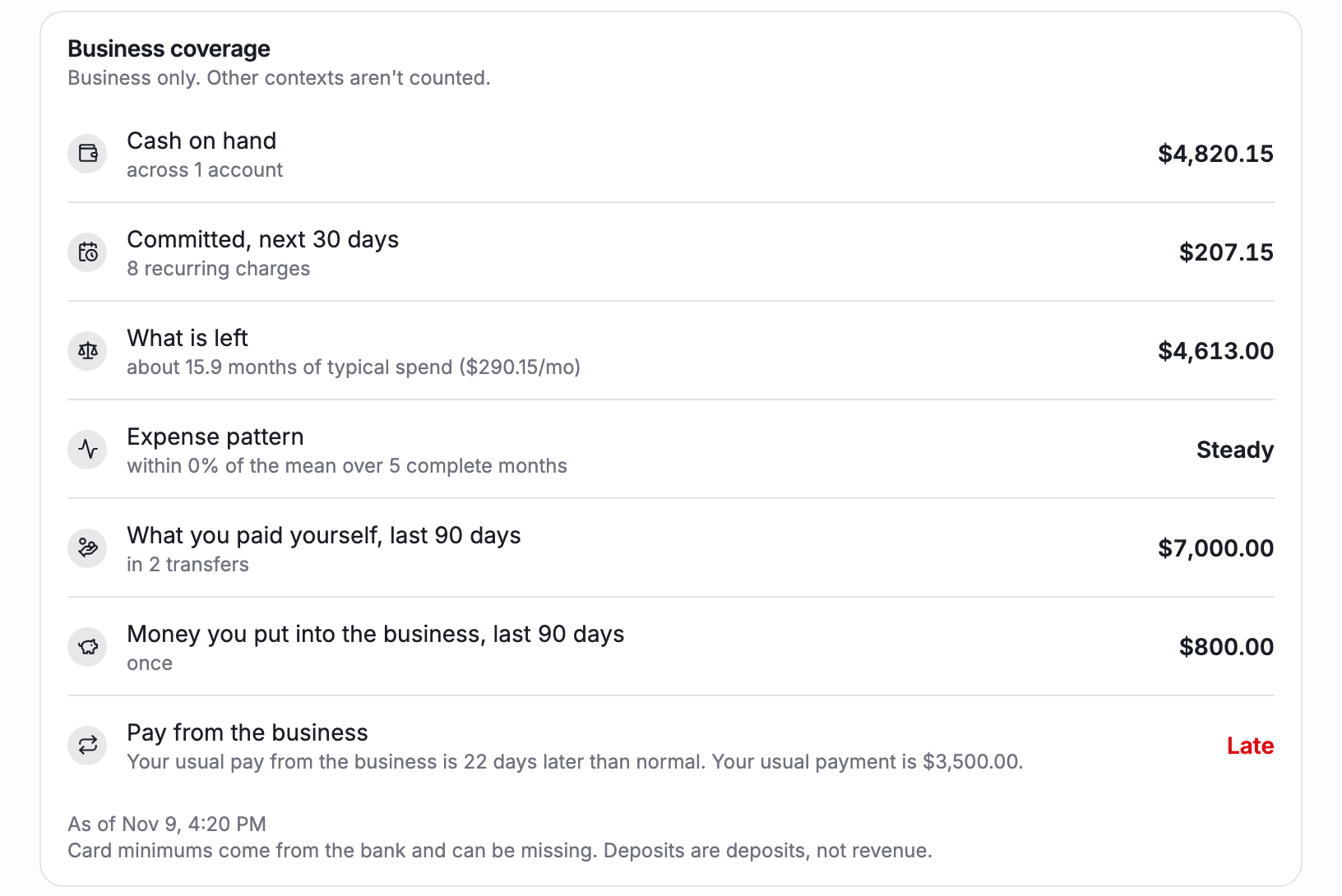
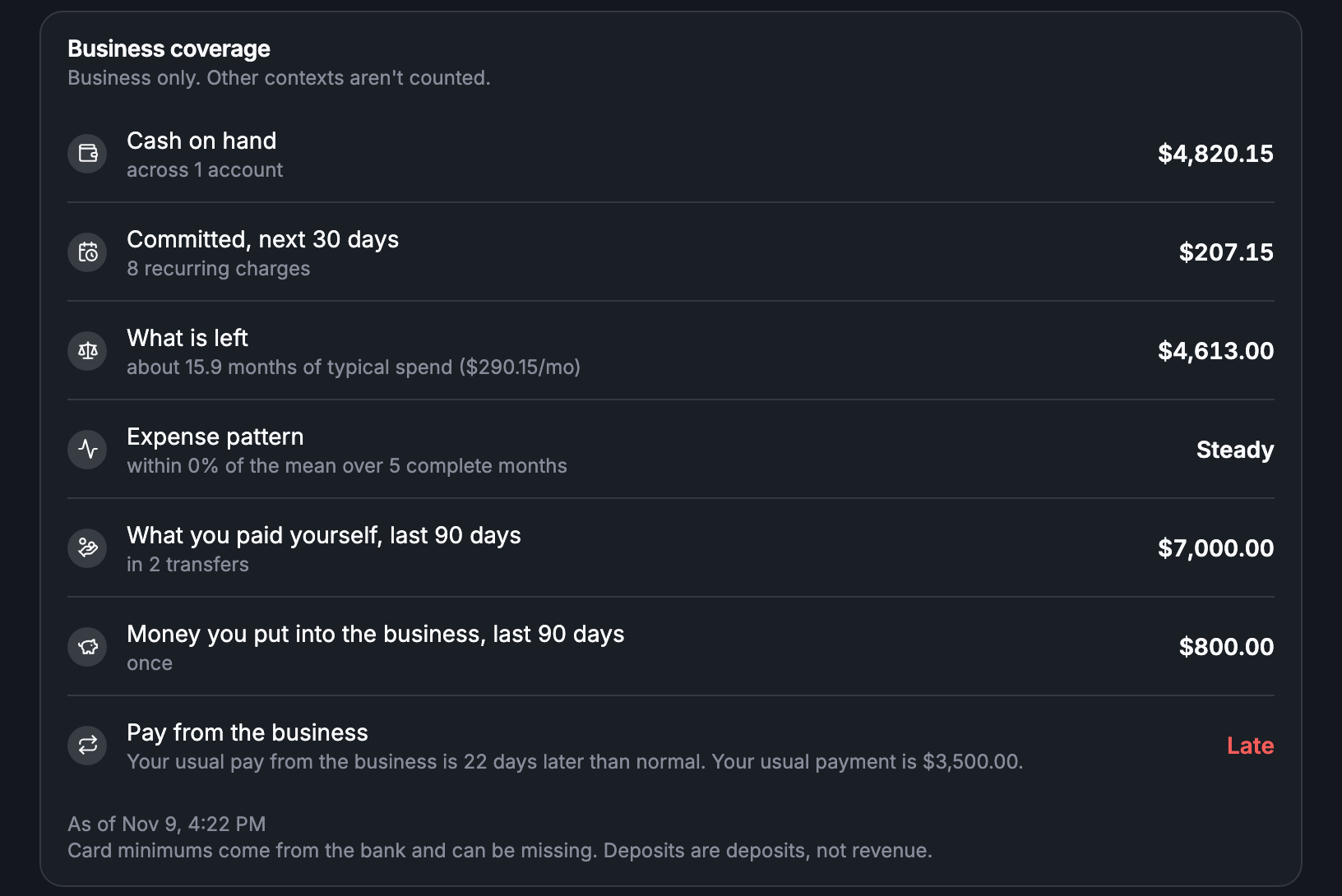
- Business and personal, kept apart: A business owner gets the business's own month plan, the next 30 days of commitments from real cash, and owner's pay shown as income on the personal plan, with up to five financial contexts under one login.
Why This Matters for Regulated Industries
The data is personal finance, and every control carries straight over to the problems banks, health systems and insurers face as they put agents near account, clinical, claims and policy data.
| What ClarityTrack does | The equivalent in healthcare, finance and insurance |
|---|---|
| The model never computes a balance; server code does | The model never decides a credit limit, a dose or a claim amount; validated rules do |
| Preview and confirm before anything hard to undo | Human sign-off before a loan decision, a prior authorization or a claim denial |
| The month plan is a draft until the customer confirms it | An AI-drafted credit memo, care plan or claim note stays a draft until an accountable person signs it |
| Outside AI assistants are read-only by default, with write access opted in per connection | Copilot, ChatGPT or Claude reaching account, patient or policy data under least-privilege access |
| Database-enforced isolation and a per-user action log | Customer, patient and policyholder data kept separate, with an access trail an examiner or auditor can read |
| Bank access is read-only, with no money-movement capability in the code | An agent can read core banking or claims data with no path to move funds or pay a claim |
| Customer data is never used to train AI models | Protected data stays out of vendor training pipelines by contract and by design |
Risks We Designed Out
| Risk | Control | Where it's enforced |
|---|---|---|
| The AI invents or miscalculates a figure | All arithmetic runs in deterministic server functions | Server code, not the prompt |
| The AI takes an action the user didn't intend | Preview, then a signed confirmation for anything hard to undo | Server-side commit gate |
| A duplicate or mistaken entry gets written | The agent checks existing records and asks before logging | Action layer |
| One user sees another user's data | Row-Level Security on every user-owned table | Database |
| A connected third-party AI overreaches | Read-only by default, writes opted in per connection, revocable any time | OAuth 2.1 scopes and server checks |
| Money moves without consent | Bank access is read-only; no money-movement capability exists | Integration scope |
| Sensitive numbers exposed on screen | One toggle masks every balance in the app | Application UI |
The Results
ClarityTrack is live, charging, and governed end to end. Public signups opened on 2 June 2026, subscriptions bill through Stripe, and the same governed data reaches customers through a published ChatGPT app and working Claude and Grok connectors.
- Live in production since June 2026, with a public demo anyone can try without signing up
- 50+ agent actions, with confirmation gating on anything hard to undo
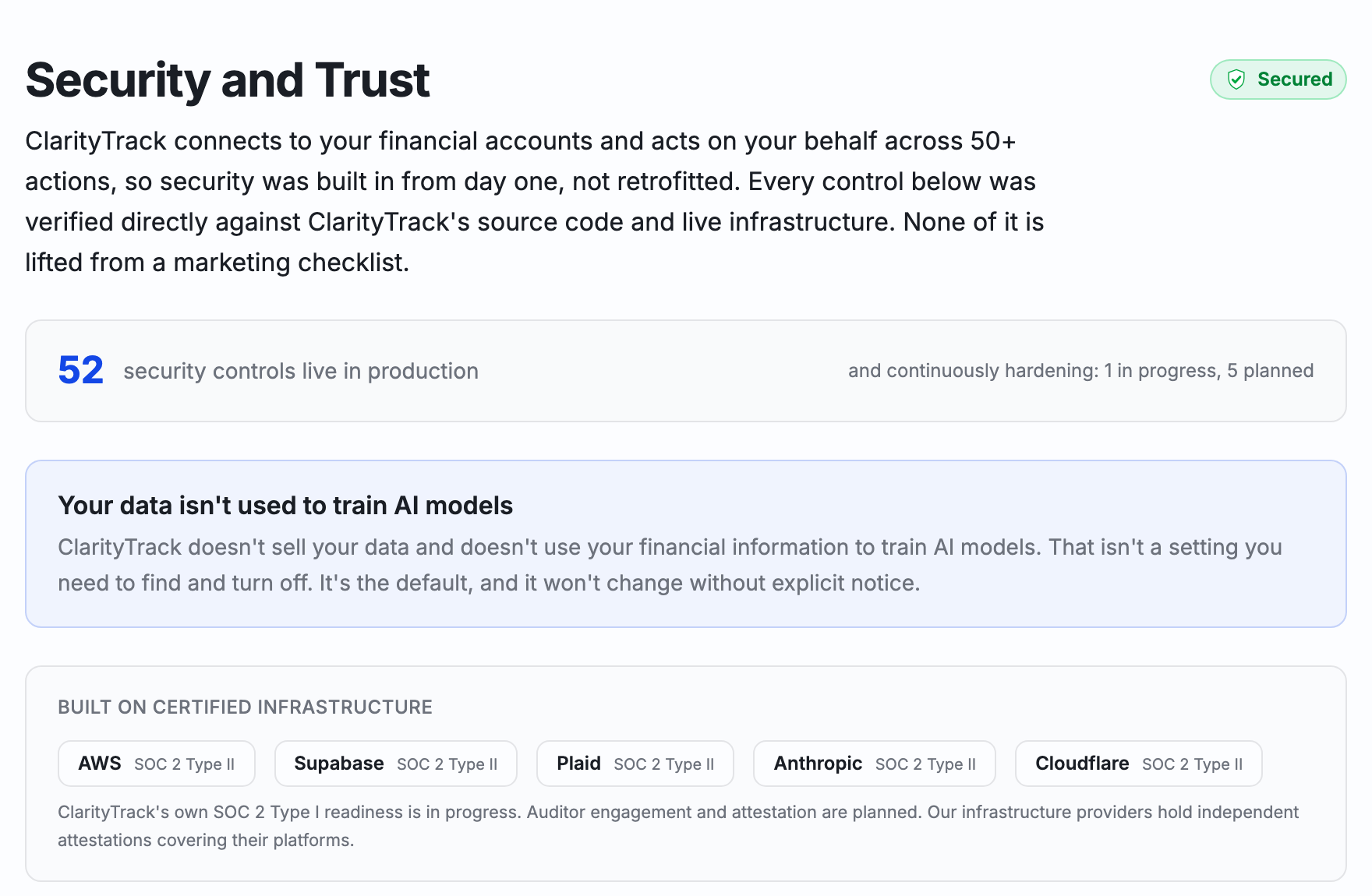
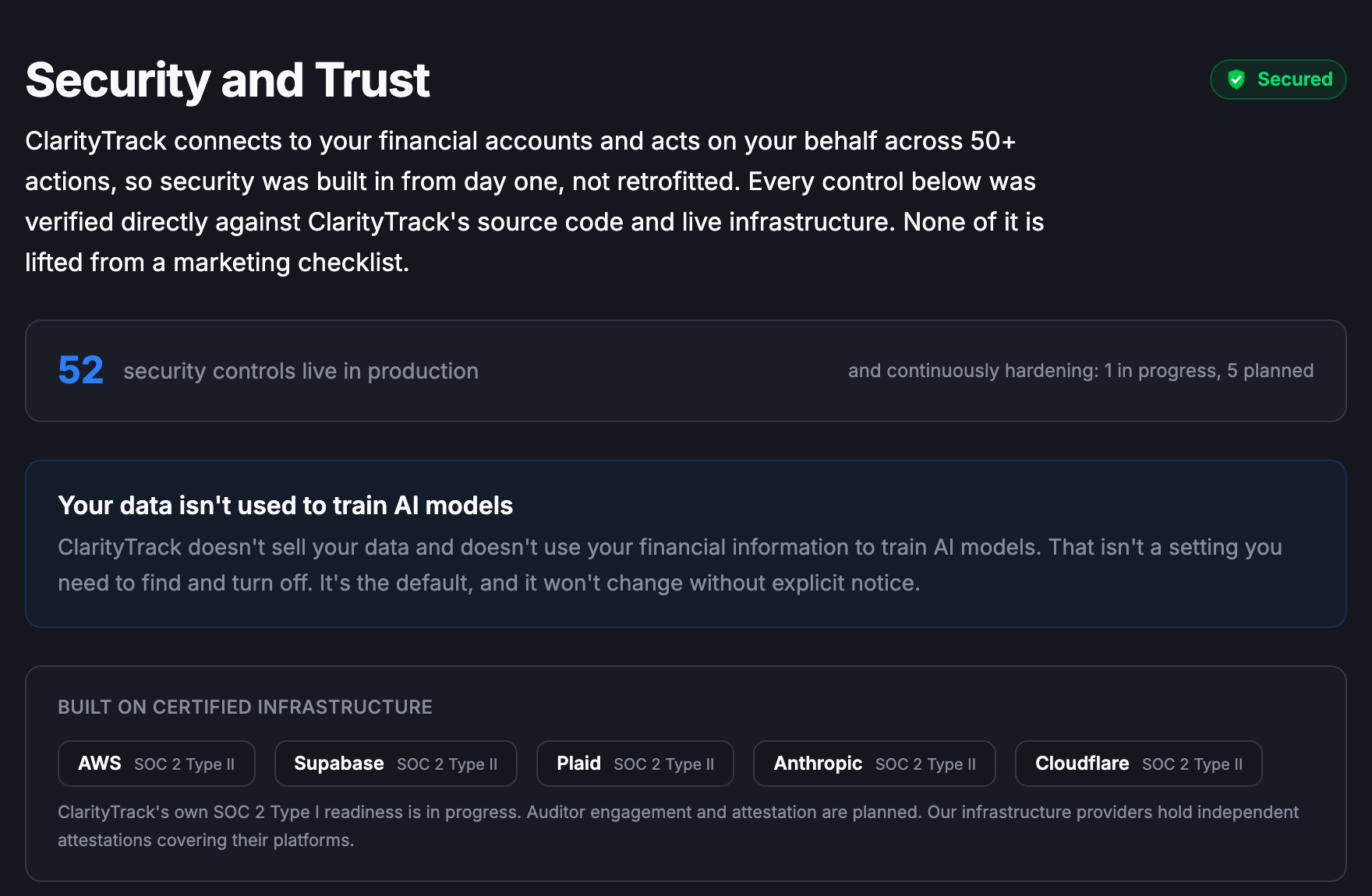
- 52 live security controls, each checkable against the code and documented in the public Trust Center, including Row-Level Security on every user-owned table, multi-factor authentication and per-user action logs
- A published ChatGPT app that passed OpenAI's app review, plus working Claude and Grok connectors, each read-only by default and revocable from Settings
- Built by one founder with AI coding agents between April and November 2026: 4,700+ commits, 580+ merged pull requests, 600+ production deploys and 900+ automated test files, with tests running on every pull request
- Zero money-movement capability, by design
"This is awesome. My credit union's web interface looks nowhere near as good as this. Now I can actually see what I'm spending."
Core Capabilities
The rules that matter are enforced by the database, the server and the integration scopes. The prompt can't override them.
In the app, anything hard to undo is previewed and waits for a yes, while small reversible edits apply at once and can be undone. When a customer turns on writes for a connected assistant, each change is still committed in a separate step the server verifies.
The same data and the same rules reach ChatGPT, Claude and Grok through one standard connector, with a customer-visible log of what each assistant accessed.
ClarityTrack's Hardship Mode plans around a debt relief program a customer is in, but it never negotiates, never contacts a creditor and never moves money. It records the facts the customer gives it.
Read-only bank access, per-sender opt-in for email, balance masking, full data export and deletion, and customer data never sold or used to train AI models.
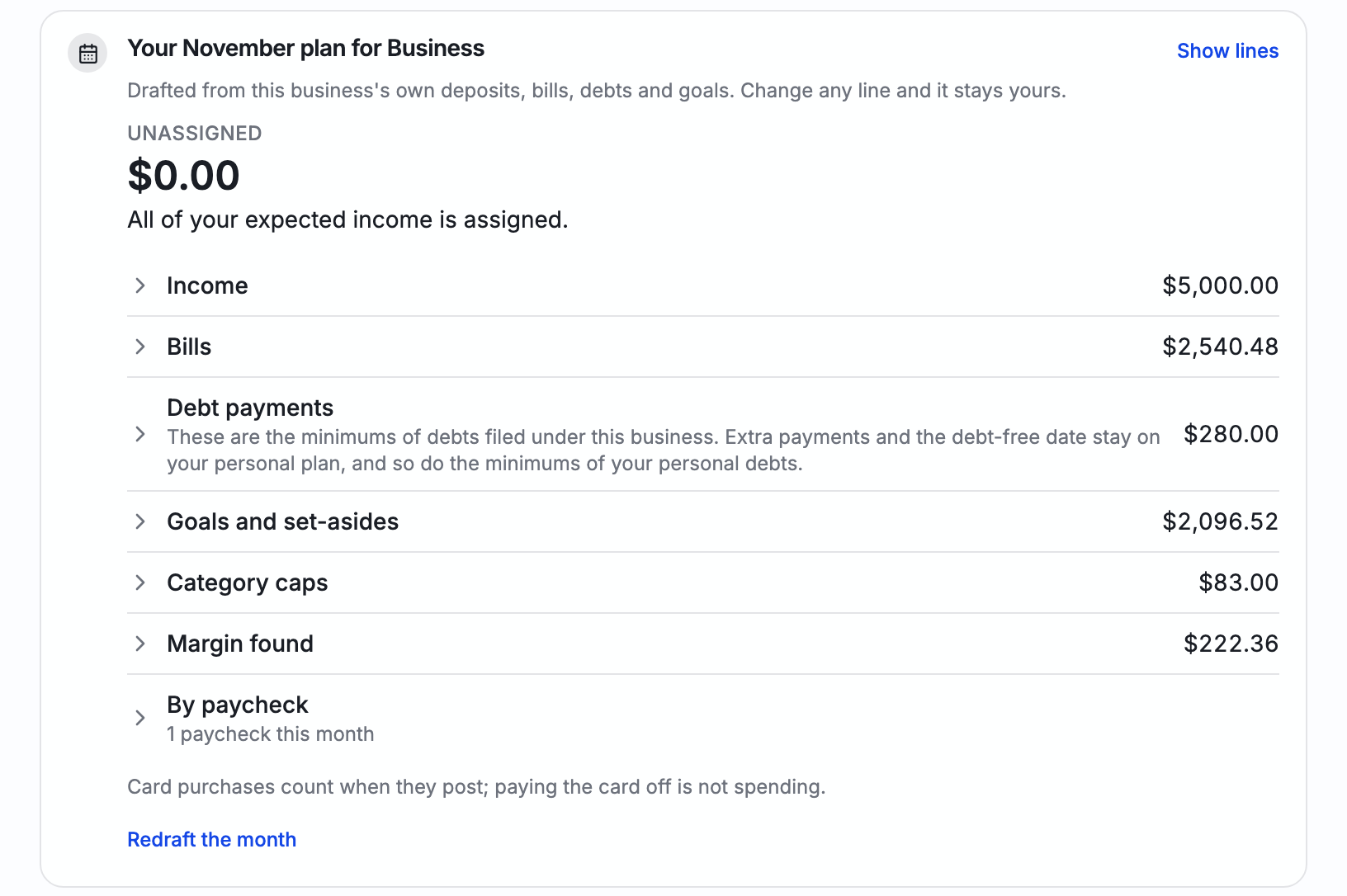
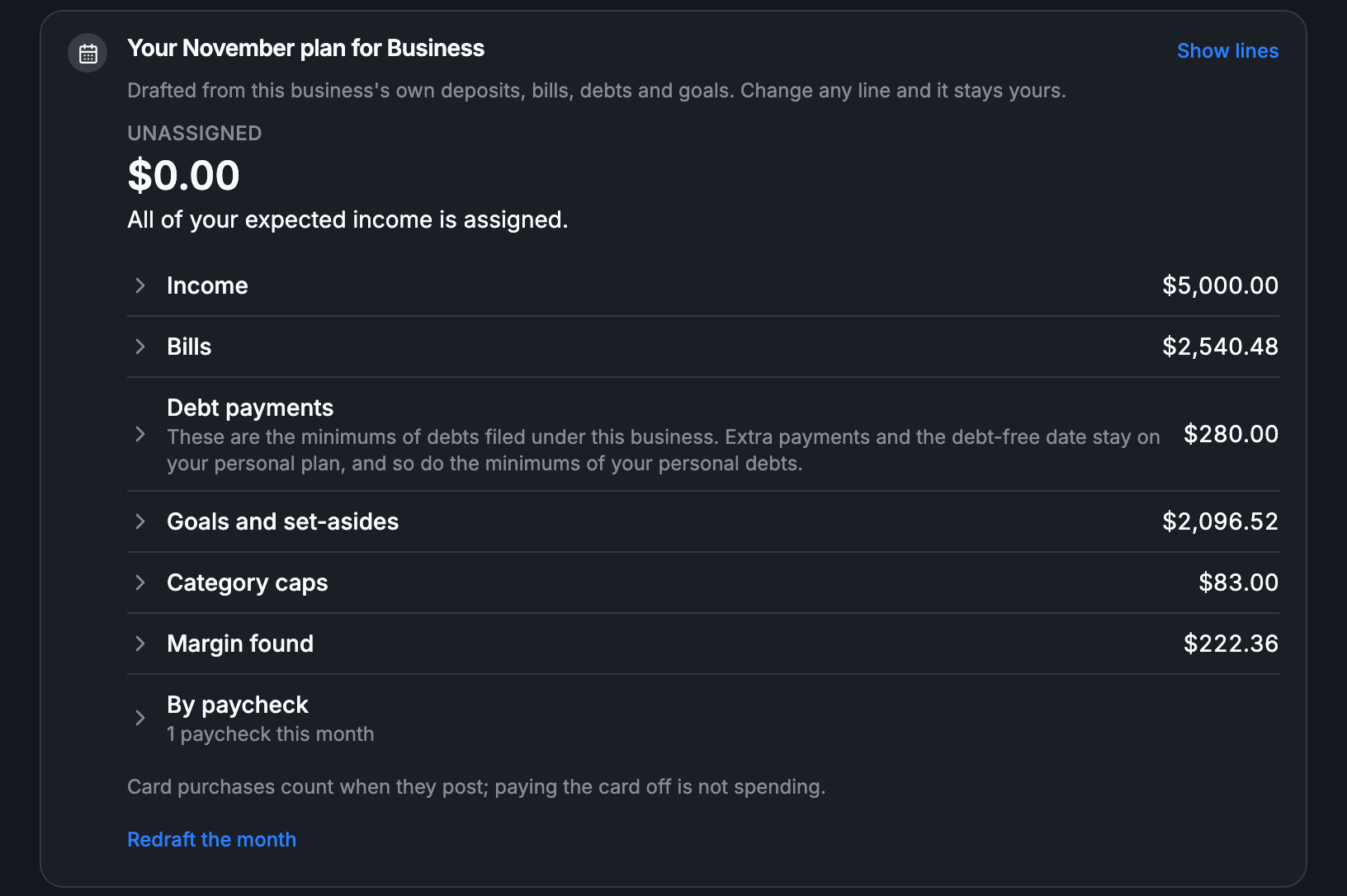
Screens captured from the live ClarityTrack demo in light and dark mode. All figures are sample data.
How the Controls Map to Frameworks
ClarityTrack is consumer finance software. The table shows how its controls line up with frameworks that buyers in healthcare, finance and insurance already use. It is a mapping, not a certification, and ClarityTrack's own SOC 2 Type I readiness is underway, with no auditor engaged yet.
| Framework | Area | ClarityTrack control |
|---|---|---|
| NIST AI Risk Management Framework | Govern | Decision rights fixed in code: the model proposes, the platform decides, the customer confirms |
| NIST AI Risk Management Framework | Map | Every agent action classified as apply-at-once or confirm-first |
| NIST AI Risk Management Framework | Measure | Deterministic calculations give reproducible results that can be tested |
| NIST AI Risk Management Framework | Manage | Signed confirmation, revocable connections and per-user action logs |
| NAIC Model Bulletin on the Use of AI Systems by Insurers | Internal controls and third-party oversight | Least-privilege scopes and access logs for every connected third-party AI |
| Interagency Guidance on Third-Party Relationships (Federal Reserve, FDIC, OCC) | Third-party risk management | Every connected AI assistant is a scoped, logged and revocable third party |
| HIPAA minimum necessary principle | Access limitation | Read-only by default; write access granted per connection, per user |
The Same Approach, Applied to Your Organization
The pattern behind ClarityTrack is what RH Strategic Consulting brings to teams in regulated industries, from healthcare to finance and insurance: decide what an AI may do before it does anything, enforce it below the prompt, and prove it with a live system. It maps to our Operating Model & Governance Design and Pilot Design & Launch phases.
Try the governed agent in the ClarityTrack demo, then book a consultation to talk through where agents fit in your organization.
Customer Journey
Review
Mapped the recurring job behind "am I on track": numbers pulled from several bank portals and a spreadsheet, then a manual check against a target date. Set the trust requirements before any code: read-only bank access, no money movement, and no model-generated figures.
Audit
Assessed budgeting apps, subscription services, accounting tools and general AI assistants. Each solved a fragment. None kept a plan tied to live account data with an agent that could safely act on it.
Implement
Built and shipped the production platform:
- April 2026: first commit
- June 2026: public signups open on 2 June; Row-Level Security on every user-owned table
- July 2026: ChatGPT app live
- October 2026: Grok connector
- Today: the month plan and the business owner's plan, live in the public demo
Optimize
Current focus is getting new users to their first useful answer faster, completing SOC 2 Type I readiness, and the Claude directory listing, which is in review.
| Review | Mapped the recurring job behind "am I on track": numbers pulled from several bank portals and a spreadsheet, then a manual check against a target date. Set the trust requirements before any code: read-only bank access, no money movement, and no model-generated figures. |
| Audit | Assessed budgeting apps, subscription services, accounting tools and general AI assistants. Each solved a fragment. None kept a plan tied to live account data with an agent that could safely act on it. |
| Implement | Built and shipped the production platform:
|
| Optimize | Current focus is getting new users to their first useful answer faster, completing SOC 2 Type I readiness, and the Claude directory listing, which is in review. |
Related Case Studies
ChemoHarmony: Building the Digital Oncology OS for Patients and Caregivers
A production-ready digital oncology platform that unifies symptom monitoring, survivorship planning, caregiver support, and AI-assisted guidance, built end-to-end by RH Strategic Consulting.
Empty Hand Records: Building a Catalog Operating System for an Independent Label
An independent record label needed more than a marketing website. RH Strategic Consulting built a custom platform that unifies catalog management, artist roster, release publishing, vinyl + digital commerce surfaces, and admin operations into one operator-grade system.
JungleCats: From Event Website to Audience Operating System
RH Strategic Consulting designed and built a custom platform for a music and events brand that unified web experience, content operations, subscriber intelligence, campaign sending, and lifecycle automation into one system, replacing multiple disconnected tools with one managed platform.
Ready to Start Your AI Journey?
Interested in achieving similar results? Let's discuss how we can help your organization reach its full potential.